
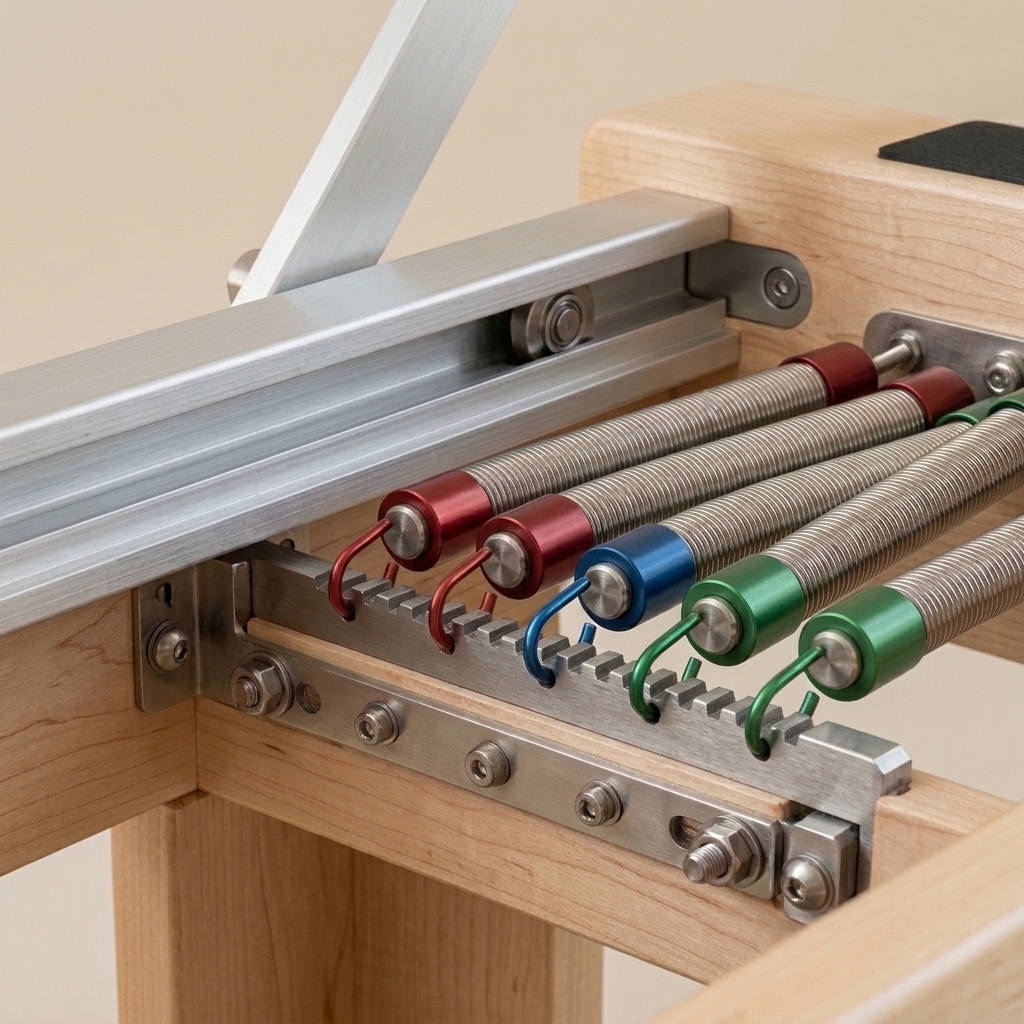
Short answer: On a busy commercial studio floor running 7–10 classes per day, replace high-load Reformer springs every 6 to 12 months (or 12–24 months in lower-volume boutique/private studios), wipe recessed aluminum tracks dry or barely damp with zero oil or silicone sprays, and clean upholstery strictly with alcohol-free, bleach-free mild soap solutions so marine-grade vinyl does not dry out and crack inside its first year.
Why commercial Reformer maintenance matters at 8 to 10 classes a day
A residential Reformer sees three to five hours of use per week. A commercial studio bed running eight 50-minute classes daily logs roughly 2,500+ active operating hours per year and tens of thousands of spring extension cycles — especially on heavy red springs used in footwork, lunges, and jumpboard sequences.
From our Xiamen factory after-sales logs across Australia, Europe, and North America, over 80% of premature Reformer complaints are not structural frame defects — they trace directly back to three preventable habits: spraying oily lubricant onto aluminum rails, wiping PU/microfiber leather with alcohol-heavy gym wipes, and running fatigued springs past their replacement window.
Commercial Reformer maintenance schedule (daily, weekly & annual)
Post this inspection cadence in your instructor prep room so every consumable component is caught before a bed has to be pulled off the booking timetable:
| Component | Inspection Cadence | Standard Action | Typical Commercial Lifespan |
|---|---|---|---|
| Resistance Springs (Red / Blue / Yellow) | Visual check daily; pull test weekly | Inspect coils at rest for gaps, rust, or hooks twisting; replace by matched color set | 6–12 mo (high volume) / 12–24 mo (boutique) |
| Recessed Aluminum Tracks | Daily (end of day) | Wipe with dry or barely damp lint-free microfiber cloth; never oil or grease | 7–10+ years (if kept dry & grit-free) |
| PU Carriage Wheels & Bearings | Weekly listen + monthly underside check | Clear hair wrap around axles; replace immediately if flat-spotted or grinding | 18–36 months (depending on jumpboard load) |
| Upholstery (Carriage, Headrest, Box) | After every class | Mist alcohol-free mild soap onto cloth (not seams), wipe clean, dry with second cloth | 3–5+ years (vs. 6–9 mo if using alcohol wipes) |
| Ropes, Double Loops & Cleats | Weekly | Check for fraying near pulley bends, stitching pulls on D-rings, and cleat grip slip | 12–24 months (loops/straps washable) |
| Footbar Pins, Bolts & Frame Screws | Weekly check / quarterly torque | Verify locking teeth engage cleanly; snug hex bolts on legs, risers, and gearbar | 5–10+ years (periodic tightening required) |
Five warning signs that a Pilates spring must be pulled off the floor today
Music-wire alloy springs typically lose 15%–20% of their original linear tension after ~500 hours of heavy commercial cycling, even before visible damage appears. Pull any spring out of service immediately — without waiting for the end of the week — if you observe:
- Visible coil gaps at rest: When unhooked and lying flat, healthy coils sit tight together with zero daylight between rings. Any permanent separation means metal yield has begun.
- Kinks, bends, or twisted end-hooks: Usually caused by clients slamming the carriage home without control or hooking a spring unevenly on the gearbar.
- Rust, pitting, or flaking nickel/chrome plating: Coastal humidity and sweat salt create micro-pits that concentrate stress and cause sudden snaps.
- Pinging, grinding, or metallic chatter during extension: Indicates worn hook necks or internal coil friction rubbing against the spring sleeve or anchor pin.
- Asymmetrical resistance between matching colors: If two red springs on the same Reformer feel noticeably different during unilateral leg work, replace all red springs on that bed as a matched set. Never attempt to bend, shorten, or DIY-repair a fatigued spring.
Track and carriage-wheel care: why oil and silicone sprays ruin smooth glide
When a carriage starts to feel slightly gritty or loud, the worst instinct is reaching for WD-40, silicone spray, or machine grease. On both solid maple Reformers and anodized aluminum Reformers, wet lubricants act like flypaper for sock lint, hair, and studio dust — turning into an abrasive black paste inside 72 hours that scores polyurethane wheels and clogs sealed bearings.
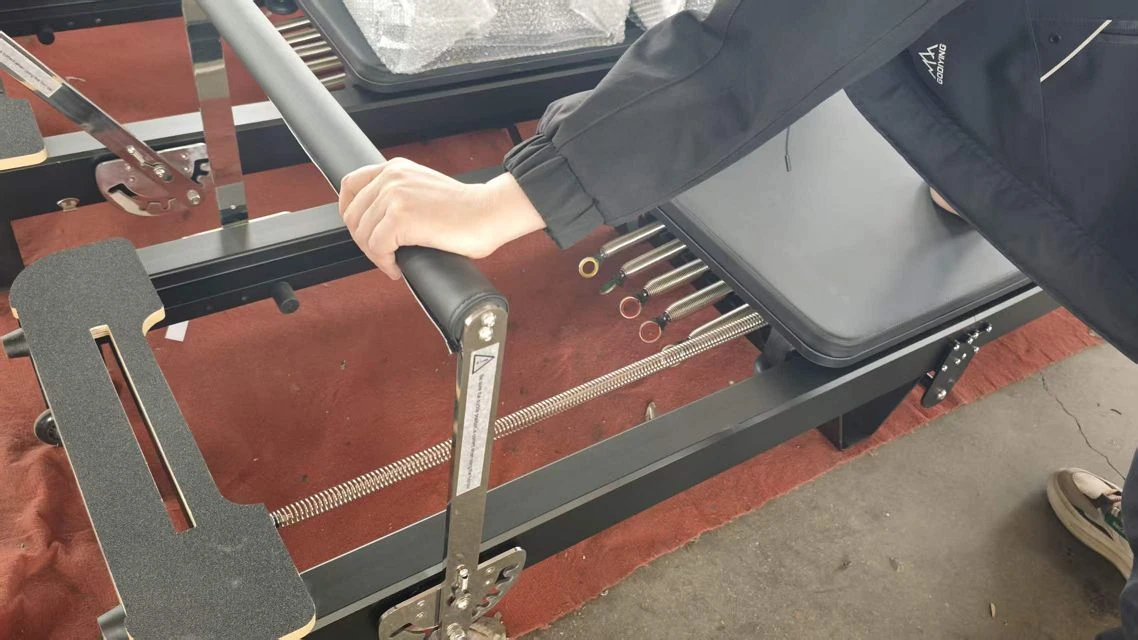
Instead, wipe both inner and outer rail channels nightly with a dry microfiber cloth (or barely damp with plain water, dried immediately). Once a month, lift the carriage off the rails, wipe the PU wheel treads clean, and use fine tweezers to remove wrapped hair from the horizontal and side-guide wheel axles.
Cleaning commercial Pilates upholstery without cracking the vinyl
Commercial microfiber leather and marine-grade vinyl are engineered for sweat and abrasion resistance, but harsh disinfectants strip out their internal plasticizers within months, leaving stiff, peeling carriage tops. Follow this simple studio cleaning rule:
| Cleaning Agent | Verdict | Real-World Effect on Commercial Upholstery |
|---|---|---|
| Mild pH-neutral dish or castile soap + warm water | Recommended | Cuts body oils and sunscreen cleanly without drying surface coatings |
| Certified alcohol-free, ammonia-free gym wipes | Approved | Fast 3-minute turnover between classes; preserves supple hand-feel |
| Pure isopropyl alcohol / 70% ethanol sprays | Avoid | Extracts vinyl plasticizers rapidly; causes hairline cracks in 4–6 months |
| Bleach, chlorine wipes, or abrasive sponges | Never Use | Degrades backing fabric, fades warm stone/oat tones, and ruins seam stitching |
Always spray cleaner onto your microfiber cloth rather than directly onto the carriage or sitting box — liquid pooling inside stitched seams can soak into the high-density EVA foam core and timber base over time.
Spare-parts buffer to pack inside your initial factory container
When sourcing directly from Xiamen via our Studio Equipment Packages, the smartest operational move is adding a compact wear-parts box inside the same wooden export crate. Shipping a replacement spring set or wheel kit later by DHL/FedEx air courier often costs more in freight than the hardware itself. For every 10 commercial Reformers, we recommend packing:
- 10–12 spare carriage springs (weighted toward your highest-wear heavy red and medium blue tensions) so you can swap matched sets immediately at Month 9–12.
- 2 complete PU wheel & bearing kits (8 load wheels + 8 side guide rollers) plus spare rubber carriage stoppers.
- 4–6 pairs of spare double-D loops / cotton straps and 2 spare rope sets so frayed straps never take a bed offline before peak morning classes.
- 1 small touch-up finish kit (for timber frames) and an extra set of hex keys kept dedicated to your studio maintenance drawer.
Structuring a 10-minute weekly studio inspection log for instructors
Assign one senior instructor or studio lead a paid 15-minute slot every Sunday evening to inspect every numbered bed (Bed #1 through Bed #10). Check five points per machine: spring coils at rest, footbar pin lock-in, pulley rope fraying, carriage glide sound from stop to stop, and leg/riser hex bolt tightness. Logging date, bed number, and spring swap dates creates both zero-downtime reliability and clean commercial liability documentation for studio insurers. See our Factory QC & Inspection Standards for the exact mechanical checks we run before every crate leaves Xiamen.
Frequently asked questions on Reformer springs & maintenance
How often should commercial Pilates Reformer springs be replaced?
High-volume group studios running 7–10 classes daily should replace heavy-use carriage springs every 6 to 12 months. Lower-volume boutique or private-training studios typically replace springs every 12 to 24 months, or sooner if any coil gap, rust spot, or tension mismatch appears during weekly checks.
Should you lubricate Pilates Reformer tracks?
No. Never apply WD-40, oil, grease, or silicone lubricant to recessed aluminum Reformer rails. Lubricants trap studio dust, lint, and hair into a sticky grit that accelerates wheel wear and creates rattling noise. Keep tracks clean and dry with a microfiber cloth.
Can I use alcohol wipes or Clorox on Pilates Reformer vinyl?
Avoid pure alcohol sprays and bleach/Clorox wipes. Repeated alcohol or chlorine exposure pulls softening plasticizers out of commercial upholstery, causing brittle cracking and peeling seams within months. Use mild soap diluted in water or certified alcohol-free, ammonia-free gym wipes.
Summary: prevent downtime with dry rails, gentle cleaners, and a spare spring kit
Commercial Reformer longevity comes down to boring consistency: wipe rails dry every night, ban alcohol and bleach from upholstery, swap matching spring sets on a 6-to-12-month cycle before metal fatigue turns into a broken coil, and pack a low-cost spare-parts kit inside your opening container. If you are still planning your opening budget or equipment mix, review our Studio Equipment Cost Guide or request a factory spares BOM alongside your equipment quote.
Include a 12-Month Commercial Spares Kit in Your Quote
Request matched replacement springs, PU carriage wheel sets, and microfiber upholstery swatches packed inside your primary equipment shipment from Xiamen.
Leave a Comment or Ask a Studio Question
Only your email address is required (never published). Your note is forwarded straight to our team for review and email follow-up.