
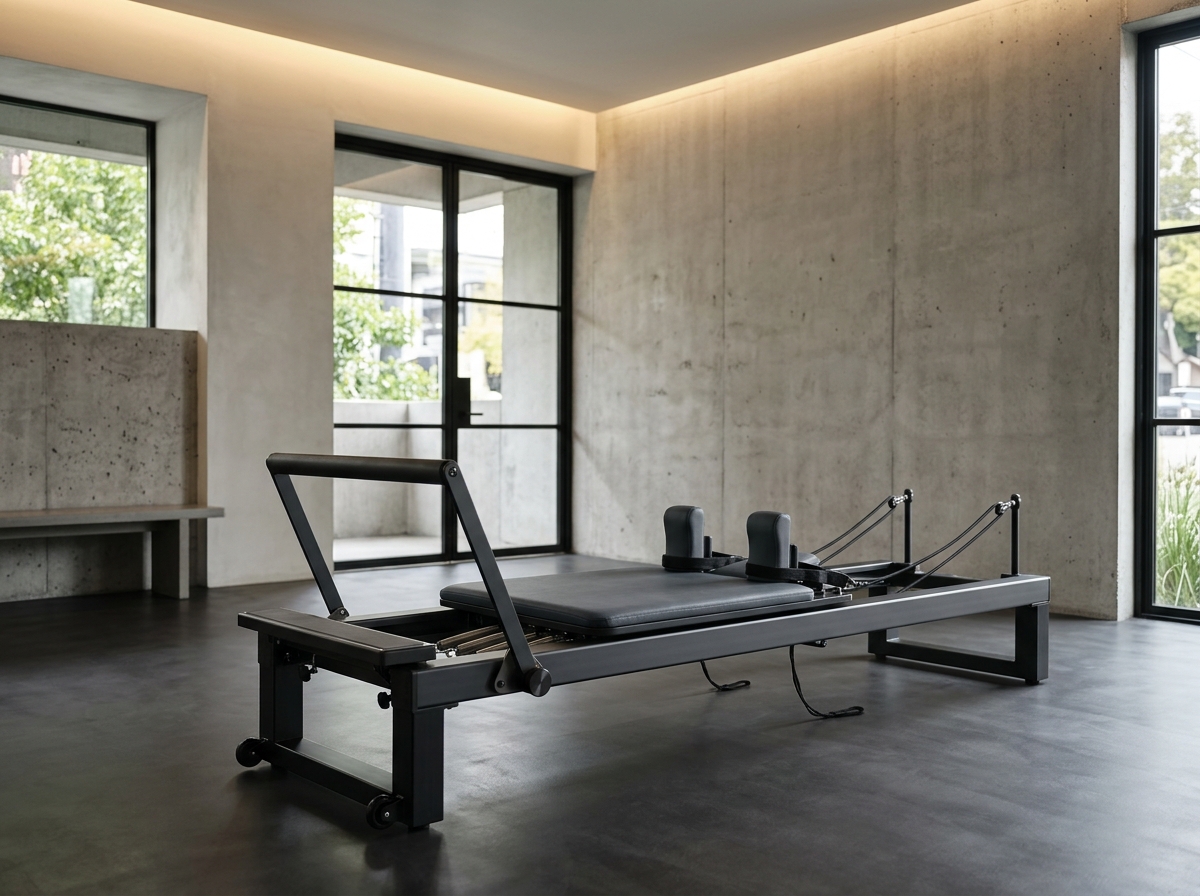
Short answer: Neither frame material is universally superior — they optimize for different commercial operating profiles. Choose solid North American maple or smoked walnut when warm architectural aesthetics, heavy vibration-damped acoustics, and boutique membership pricing come first inside a climate-controlled room. Choose hard-anodized aluminum when you run 10–12 athletic classes daily, operate in humid coastal or heated rooms, need zero timber upkeep against disinfectant sprays, or want 20%–25% tighter container loading density.
Wood vs. anodized aluminum vs. steel: full commercial comparison
Brochures usually reduce this decision to “warm wood vs. modern metal.” Once a floor runs 2,500+ class hours a year and ships overseas by ocean freight, frame mass, chemical wipe resistance, and crate geometry matter far more:
| Commercial Factor | Solid Maple / Walnut Frame | Anodized Aluminum Frame | Painted / Mild Steel Frame |
|---|---|---|---|
| Commercial Lifespan | 10–20+ yrs (with stable HVAC) | 10–15+ yrs (any indoor climate) | 8–12 yrs (chip/rust risk in sweat zones) |
| Acoustics & Jumpboard Feel | Dense mass (~95–115 kg) damps vibration quietly | Crisp, taut feel; relies on sealed bearings & stops | Can resonate or ping under fast athletic springs |
| Humidity & Heated Classes | Requires 40%–60% RH indoor HVAC | Immune to humidity, coastal air & heat | Condensation accelerates corrosion at weld seams |
| Disinfectant Wipe Tolerance | Use mild wood-safe spray; avoid harsh alcohol | Shrugs off daily commercial gym sprays | Powder coat dulls if scraped by buckles/shoes |
| Cosmetic Scuff Repair | Deep scratches can be lightly sanded & re-oiled | Anodized oxide layer resists scuffs; deep gouges stay | Requires touch-up paint to prevent rust |
| Typical Packed Volume | 1.00 – 1.15 CBM (plywood crate) | 0.80 – 1.00 CBM (slim/knock-down) | 0.85 – 1.05 CBM |
Noise, frame mass, and heavy jumpboard stability
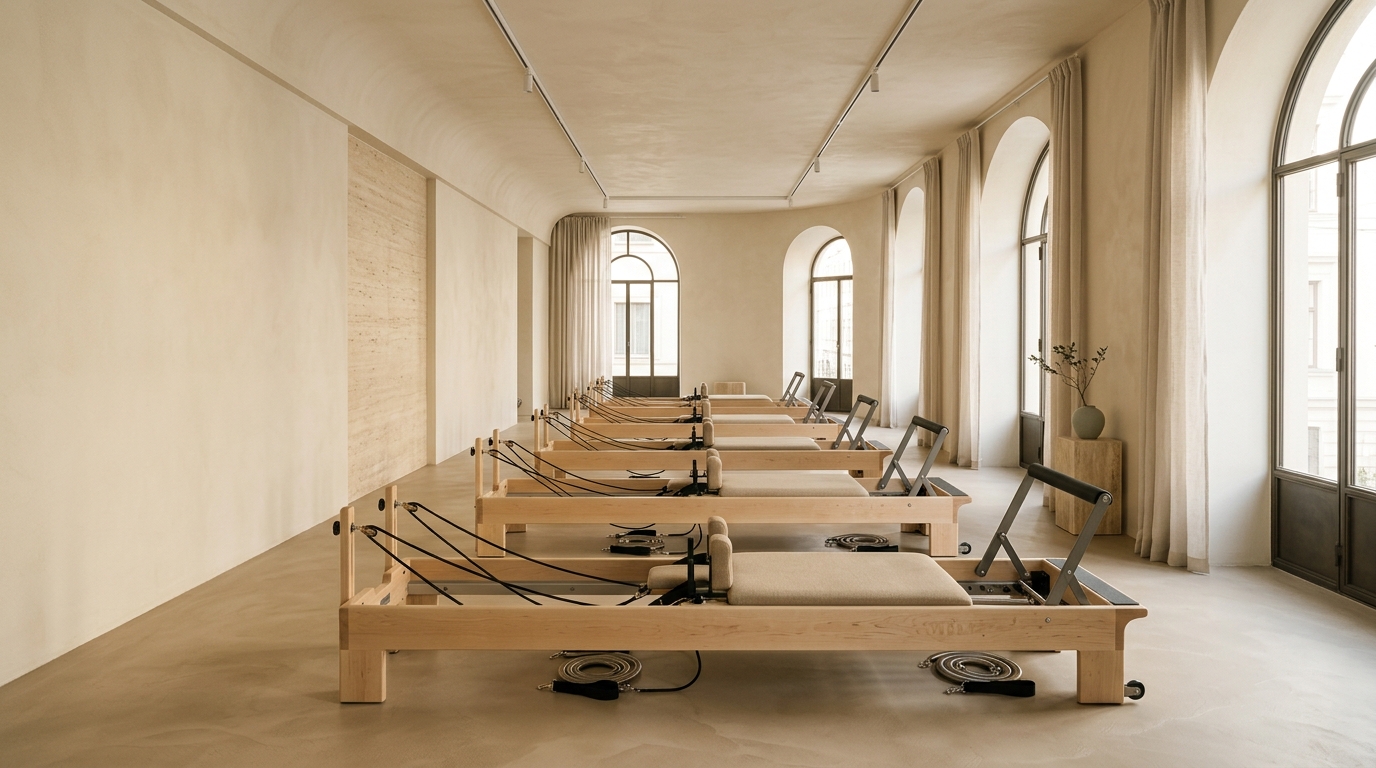
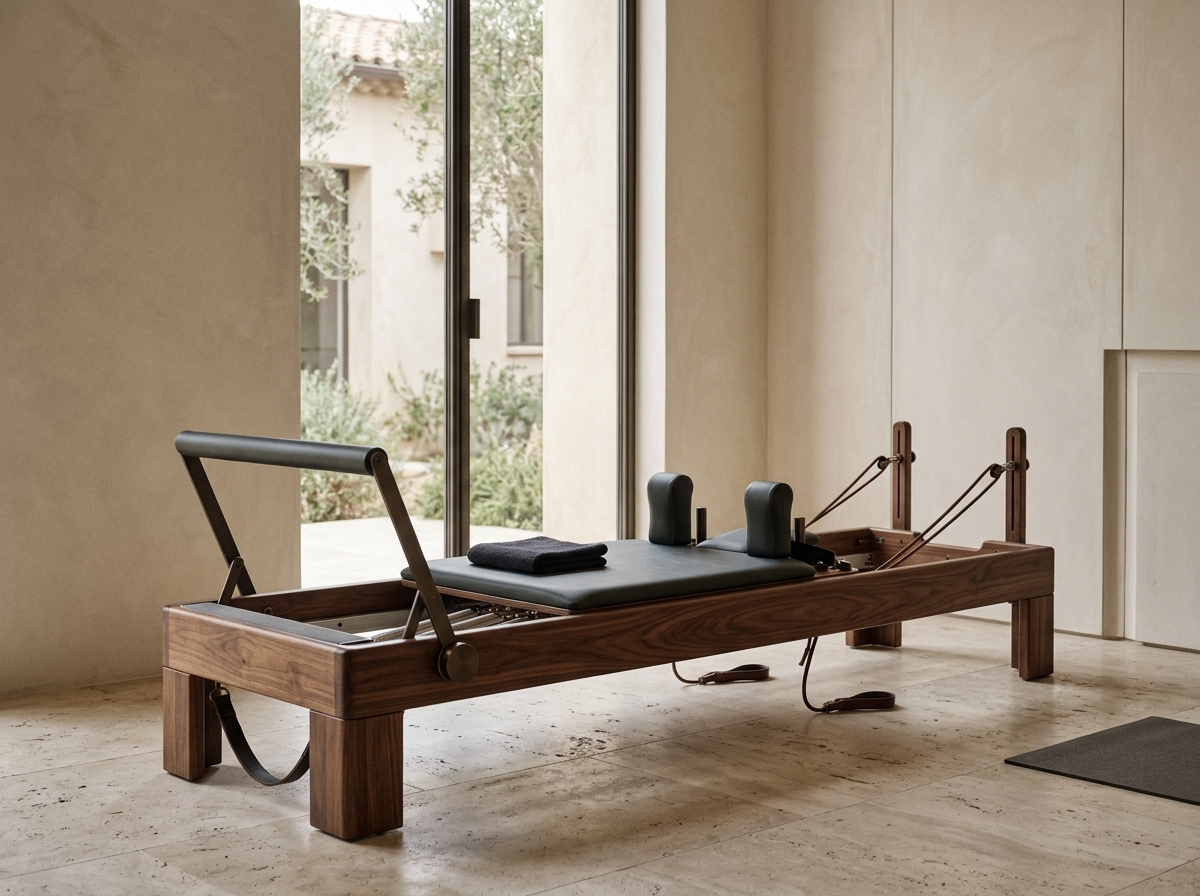
Heavier wooden Reformers (often 180–220 lbs / 85–105 kg assembled) naturally absorb low-frequency thumps when ten clients land simultaneously on cardio jumpboards. That grounded silence is why classical studios and hotel wellness suites still lean toward solid maple or dark walnut.
Lighter aluminum frames (roughly 125–155 lbs / 58–72 kg assembled) do not damp resonance on their own, which is why cheap thin-walled metal Reformers sound tinny after three months. Properly built commercial alloy frames solve this with thick-walled box extrusions, non-slip weighted feet, and 8-bearing quiet-roll carriage assemblies.
Why the recessed glide track decides real lifespan
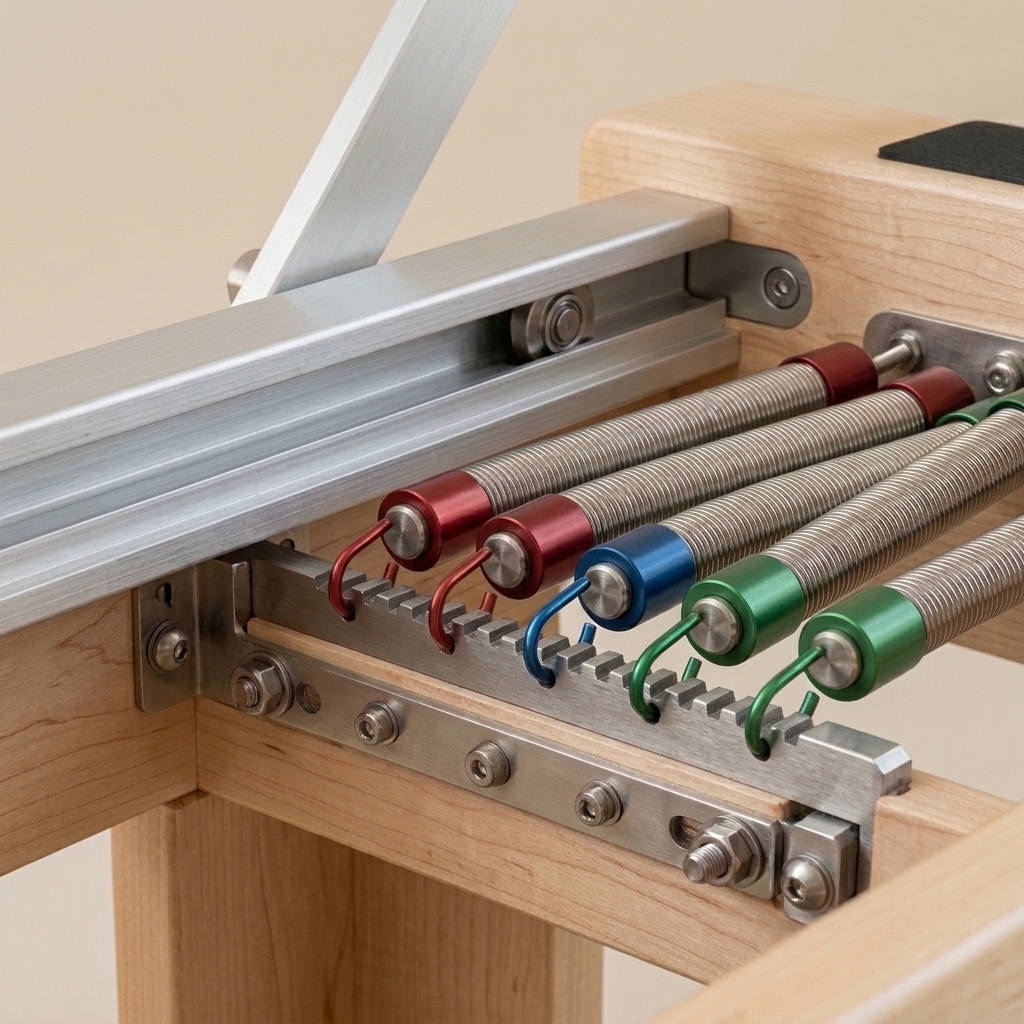
One engineering fact surprises many first-time studio buyers: even on a solid maple Reformer, the carriage never rolls directly on wood. It rolls on precision aluminum guide rails recessed inside the hardwood rails. When a Reformer develops squeaks, hesitation, or uneven drag six months after opening, the culprit is almost always rail alignment, unsealed budget bearings, or lint and oil build-up inside the track channel — not the outer timber box.
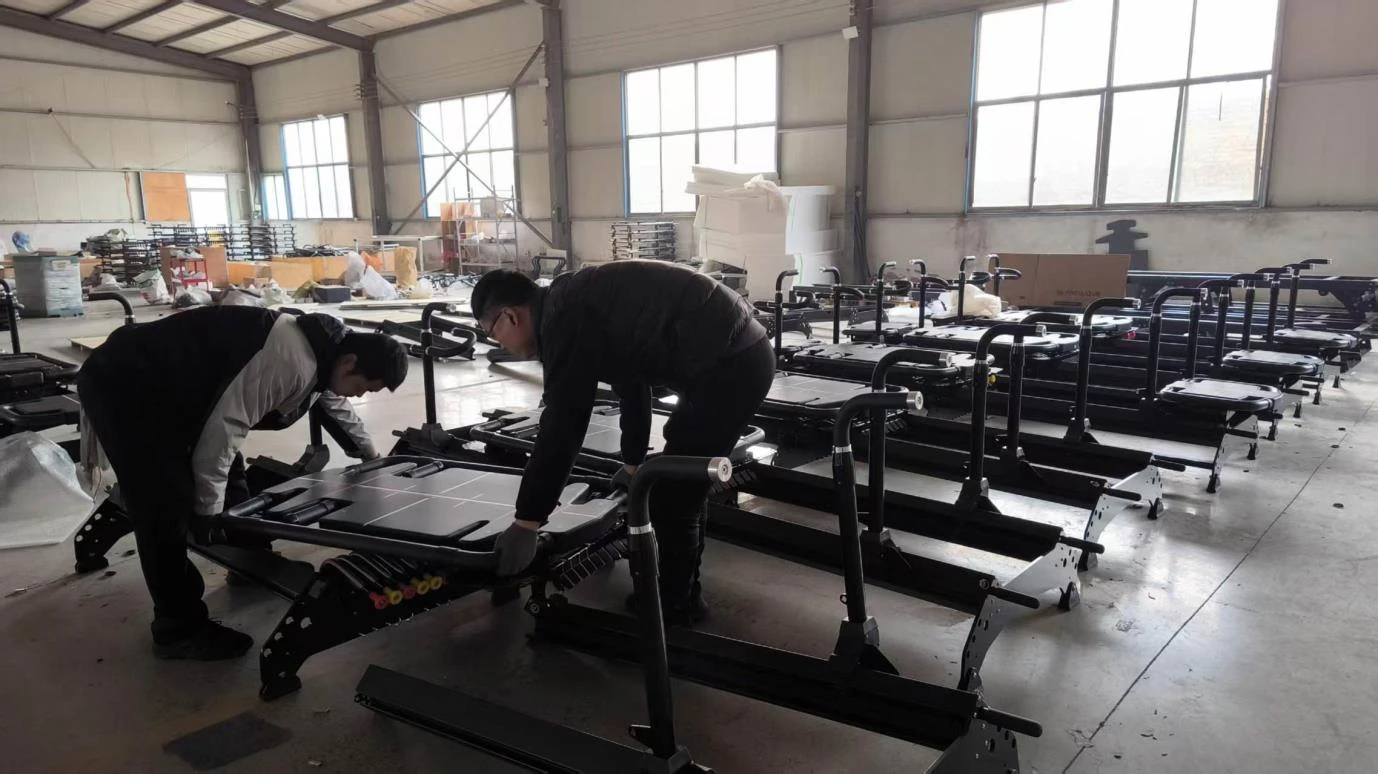
On our workshop floor, every maple, walnut, and aluminum bed runs through a loaded pre-shipment glide and spring tension test documented on video before crating. See all six checkpoints on our Factory & Quality Control page.
Humidity, disinfectants, and realistic 12-month studio upkeep
Commercial studios wipe machines down eight to twelve times per day. Knowing the real maintenance trade-off avoids surprises for your studio manager:
- Solid wood upkeep: Keep indoor relative humidity between 40% and 60%, use mild pH-neutral upholstery/wood cleaners (never high-alcohol bleach wipes on lacquered rails), and check corner lag bolts quarterly. Advantage: accidental scratches from jewelry or shoe buckles can be lightly touched up years later.
- Anodized aluminum upkeep: Practically zero frame care against sweat or disinfectant sprays and zero seasonal wood movement. Only recurring task: wipe rail channels weekly with a dry lint-free cloth and check chassis fasteners every 3–4 months under heavy jumpboard use.
Packed crate volume and 20GP / 40HQ container loading math
A full-frame wooden Reformer inside an ISPM-15 plywood crate consumes roughly 1.00–1.15 CBM, fitting ~22–25 beds in a 20GP container (~28 CBM usable). Slimmer knock-down aluminum packaging averages 0.80–1.00 CBM, allowing 20%–25% higher unit density per sea container. For a single 8-bed studio opening, that freight delta is modest — whereas for regional importers shipping 40HQ wholesale containers or running private-label lines through our OEM program, aluminum packing density directly lowers landed unit cost. Inspect live CBM totals in our Studio Planner.
When folding frames or hybrid studio mixes win
You do not have to lock an entire multi-room club into one material. Many 16-bed operators install Urban Aluminum Reformers in the high-sweat main group room while placing pale maple Tower Reformers and a Cadillac table in the quiet private suite. Meanwhile, hotels and multi-use rooms that clear floor space between sessions choose our Commercial Folding Reformer (PLR-REF-F01) (0.72–0.90 CBM crated).
Frequently asked questions on wood vs. aluminum Reformers
Are aluminum Pilates Reformers noisier than wooden ones?
Will solid maple Reformers warp in humid coastal cities like Sydney or Miami?
Can I order wood and aluminum Reformers with matching upholstery colors in one batch?
Summary: match the frame to your class style and climate
Choose solid maple or smoked walnut if boutique warmth, acoustic quietness, and premium room photography anchor your brand inside a climate-controlled studio. Choose hard-anodized aluminum if high-tempo group turnover, heated or coastal humidity, fast disinfectant wipe-downs, or tighter container freight drive your economics. Before locking your finish, order physical wood, alloy, and leather swatches and verify room clearances in our studio layout guide.
Inspect Wood, Alloy & Upholstery Swatches First
Mix Maple, Aluminum, Walnut, or Folding beds freely in the Studio Planner, or ask us to mail physical frame and upholstery swatches before production.
Leave a Comment or Ask a Studio Question
Only your email address is required (never published). Your note is forwarded straight to our team for review and email follow-up.